Wednesday, 25 December 2013

Camera research

As we want our opening two minutes to have the 'Home movie' look to it, i have decided that maybe using the highest quality video camera isn't the best option, as in my eyes the final clips will look too crisp and perfect, for example we want our film to look a bit like the way 'The Blair Witch Project' was filmed, After doing some research i believe the camera used was an CP-16 film camera, unfortunately we don't have this camera available, or one like it but were considering using an old handheld film camera instead of a new, high resolution digital camera. We later came to the conclusion that only some of our opening should be filmed on a old school, handheld camera, and the rest should be filmed using more recent, high definition equipment.

CP-16 Film Camera: They were primarily intended for television news filming and were quite popular with local and national news agencies before the advent of portable videotape Electronic News Gathering, (ENG) formats, as well as documentary and drama production.
This was the camera they filmed most of 'The Blair Witch Project' on, so i thought i would be a good idea to include this as a comparison to the cameras of today.

Footage:

GoPro Hero 3 Black Edition: GoPro is a brand of high-definition personal cameras, often usedin extreme action video photography. They are known for being lightweight, rugged, wearable or mountable in unusual places such as outside planes, cars, or boats. This high definition camera could be used to film shots where the camera had to be in awkward, less acessable angles, such as mounted for a first person view.

Footage:


Canon EOS 600D: With class-leading 18-megapixel resolution, user-friendly design, and the entire EOS family of lenses and accessories at your disposal, the EOS 600D lets nothing stand in the way of your photography. This is another high definition camera which we could use to film any normal shots, using normal angles as opposed to unusual ones.

Footage:

Tuesday, 24 December 2013

Titles research

The opening titles of a film tell the audience the title of the film and is traditionally shown at the beginning. Normally the genre of the film will determine what colour scene/fonts are used, for example horror movies tend to have black backgrounds, and red fonts, as these colours link to horrors. The Fonts also tend to be quite sinister and dark, reflecting how the film will be.

The Bourne Legacy is an action packed spy film.
The titles of this film are in plain white block text, with each word being in a different level of boldness which makes it stand out more and gives it a sense of being more sophisticated. It is quite conventional of an action film to have plain white text. The black background of the title makes it stand out more. My group are doing an action film quite similar to The Bourne Legacy and we are probably going to use the same type of font as we want our film to seem as professional as possible.

The A-Team is a very well-known action film.
This title is from the most recent A-Team film
made in 2010, which is a remake starring Bradley Cooper, Liam Neeson and Sharlto Copley. They have used a silver colour with the font to make it look like it is metallic which connotes guns and bullets.The bullet holes in the writing suggests to the audience that that this film will have guns and violence in it which is typical of an action film. They have also chosen to use bold military style font making it look tough and professional. The black background makes the title stand out
and be more in your face preparing the audience for what might come in the rest of the film.

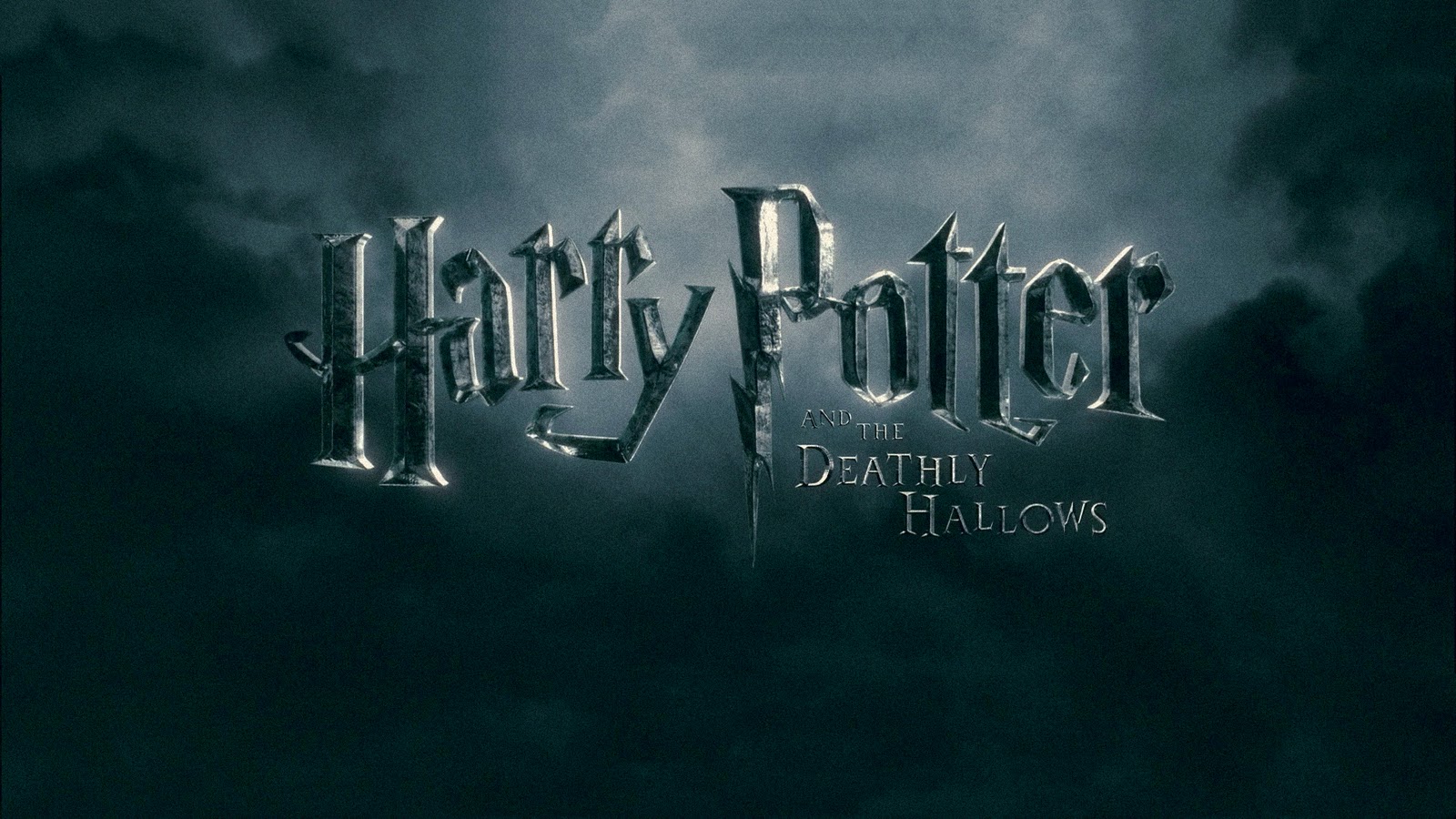
The opening title of the Harry Potter film series look
like they are written in an old-style font, something
which looks like it would be in an old hand-written book which reflects the theme of the film which is magic and mystery. The font is a dark, old looking silver and the background is dark clouds, much like you would see when it's raining which will make the audience think that there is going to be a lot more serious and evil parts to this film compared to the traditional Harry Potter title which is gold. The P in the title is shaped the same as the scar on Harry's forehead which is a major plot element in the film, linking the title with the film.
The detailed and the detailed and unique title
makes it very recognizable which makes for
a great marketing tool which helps promote and
sell the film.

The film Insidious is a horror film. They used red writing in their titles as it connotes blood and evil, however some romance films do choose to use red in their titles too, but the way in which the audience is able to distinguish between the two is the font and the background. The font used in this makes it look like there are devil horns suggesting that the film will have evil and religious aspects in it. Another thing done that adds a lot of effect is the shadows on the writing from what looks to be a fire which makes it look mysterious and evil. All these aspects of the title suggest to the audience that film will be a horror.

The Blair Witch Project in my opinion, is one of the best horror movies ever created, as its simplicity is what makes it so terrifying. The films opening scene is white writing on a black background, in a way this fits in perfectly with the film as it shows how amateur the filming and editing is going to be, it also gives us the impression that the film will be recored like a home movie. As a black and white font one of the most basic editing techniques, which most people can do, proving how amature the film is.

Rec is another horror film i have chosen to analyse, as most of the film is filmed how we would like to in our opening two minutes the self-filmed amateur editing kind of look. The opening scene shows the red dot, showing the camera is recording, of which we are going to try and incorporate into our film. With a white font splattered with blood suggesting that the film may contain some dark scenes within the movie. The way the title is laid out suggests to the viewer that the upcoming film will be hand held, almost relating to a home movie.

Thursday, 19 December 2013

Questionnaire results

Female


Questionnaire results

Male
These pie charts show the results we got from our questionnaire, these ones represent the answers from our male audience. From our results, we see that action and comedy genres are more favoured. However these are closely followed by the Horror genre, thismeans that whatever genre we end up doing, we will need to incorporate some aspects of these three genres into it in orderto attract a larger male audience.
The second pie chart shows that males rarely attend the cinema,there isn't much we can do to our film in order to make people who never go to the cinema watch it, although we can try making it as aoppealing as possible by taking the other results into consideration during production.
The next pie chart shows the preffered locations, the results show that males prefer iconic landscapes and urban areas.

Tuesday, 17 December 2013

Questionnaire


This is our questionnaire that we used to help us with research and planning for our film. We plan to ask five girls and five boys to complete it. By using a questionnaire, it will help us in choosing how to produce it as to comply with what our target audience enjoys watching. We decided to use closed questions as to be able to produce quantitative data and not a range of answers.

Tuesday, 10 December 2013

180 degree rule, shot sequences and lighting techniques

The 180 rule is a rule filmmakers mostly abide by in order to avoid disorientating and confusing the audience. It states that the camera cannot cut to show the same person or object from the opposite side from which they were first shown, as this messes up the direction of action and can confuse the viewer. The imaginary line of action is between a character and whatever object or person they are interacting with. Crossing this line through a straight cut can be confusing for the viewer. However, the 180 rule can be broken without confusing the viewer if the camera pans from one side of the line of action to the other in the same shot, as viewers know where they are. This is explained in more depth in the above tutorial video. In our opening two minutes we are going to stick to this rule as it allows the audience to follow the characters easier, because if you film from more than one side the audience can become confused and disorientated.

Camera movement and equipment


This video explains and shows some ways in which the camera moves - and why - and what equipment is needed to make it do this effectively. Due to our low budget on the film it is unlikely that we will be able to make/buy/use some of the equipment mentioned but we could try to recreate the action in order to cause a similar effect on the audience. In our opening two minutes we are going to experiment with a variety of different shots, all fitting in with those used in many horrors. Shots will vary from Long shots, Close ups, Extreme close ups and POV shots. By using a variety of shot types we hope to create the feeling that the audiance is actually in the forrest with our characters. We are then going to use a range of different camera movements to see which ones suit that shot best, whether thats tracking, panning or still shots, as each will create a different effect.

Camera angles and shots

This video i found explains and gives good examples of different camera angles and shots that are used in films. We have decided we will deffinitely be using a handheld shot for our film as it prevents the audience feeling secure and this good for either an action or horror film. Although because of our budget it wont be possible to use any aeiral shots or arc shots.

Types of film cuts


This is a clip i found on youtube that includes a lot of different film cuts and edits that may be useful to include in our film. It gives the name of the cut followed by a brief description of what and how the cut or edit works. There are examples from many well known films to show how you could use it. After seeing this clip, we believe we will be using several techniques from it, including after action, exit shot and look off.

Conventions in horror films (mindmap)

Friday, 6 December 2013

Film Institutions

These are the six biggest film institutions. Film institutions are very important as they provide the money, allowing the film to happen. Without these companies, films would struggle to acquire the funding to create a blockbusting film. The companies also own studios allowing films to be made inside when needed and are also able to create brilliant sets. The only downside to film institutions funding a film is that they like to have complete control over what happens on the project, meaning it won’t always end up how you originally planned it too, However without these institutions films wouldn't be the same.


Columbia Pictures.


Columbia pictures was founded in 1919, it is one of the film studios in 'the big six'. In 1991, Sony bought part of the company and so Sony Pictures is a 'parent company' to Columbia. Another slightly less well known, but still widely appreciated company that Sony Pictures owns is Tristar Pictures. As Sony is primarily associated with gaming and electronics their film side isn't as well known. Most of their money comes from the fact that they are already such a big company so people have heard of them so will trust in them. They also do a lot of advertising for their films through their other products (such as the PS3 gaming console).
Columbia Films include:  'Spiderman', 'Men in Black', 'Gladiator', 'The Da Vinci Code', 'Quantum of Solace', 'Hancock', 'The Pursuit of Happiness', 'The Adventures of Tintin, 'The Social Network', 'Bucky Larson: Born to be a Star'.


Warner Bros studios.


The Warner Brothers studios were founded in 1903. It was formed by four brothers called the Warner brothers, and was one of the first companies to make movies with dialogue in it. They also famously started the original 'Looney Tunes', as well as many more successful cartoons. Warner Bros have a very wide range of films. They tend to make high budget movies, to make a lot of money, and their films are shown around the world. Their films appeal to a very wide range of audience as they make films from many different genres.
Warner Bros films include: 'Harry Potter', 'The Departed', 'The Dark Knight', 'Slumdog Millionaire', 'P.S. I Love You', 'Charlie and the Chocolate Factory', 'Troy', 'Blade Runner'.


Walt Disney Pictures.


is probably the most famous film institution, mainly because most people grow up watching most of their films and TV shows. Disney are famous for their traditional family movies and cartoons but recently have made more action films for example 'Tron' and 'Pirates of the Caribbean' to reach out to a larger target audience by doing something a bit more appealing to teens and adults. They also own a large number of institutions: Touchstone Pictures, Pixar, Marvel, and most recently Lucasfilm. Pixar are seen as one of the best film institutions in the world, as they consistently make excellent films. Their films are enjoyable for both children and their parents, making them a real money maker. Pixar and Marvel both stray from producing a large number of films, opting instead for taking their time with each one and increasing the quality of the films. The quality of the films aren't as high as Marvel , but are more 'fun'. This is what makes for millions of fans as everyone is on edge waiting for them to bring out the next film. Through these companies Disney manages to get a huge amount of money, and it is a big factor in their recent success.
Disney films include: 'The Lion King', 'Toy Story 3', 'The Avengers', 'Pirates of the Carribean', 'Beauty and the Beast', 'High School Musical', 'Tangled', 'Thor', 'Finding Nemo', 'Hannah Montana', 'Bambi', 'The Princess and the Frog', 'Alladin', 'A Bug's Life' .


Universal Studios.


Universal pictures is another major film institution. They have large theme parks around America which help promote their business, helping them make more money. Universal, like many over film institutions, make a large range of film genres to target a large market of people. They are another company that go hand in hand with Warner Bros and Paramount as they are all in it more for the money than for the art form of making films itself. However they don't disappoint bringing out big budget films that have been highly successful and have made many films that are seen to be classics for example 'E.T' and 'Jaws'.
Universal films include: 'Tinker Tailor Soldier Spy', 'E.T', 'Bourne Identity', 'Despicable Me', 'Back to the Future', 'A Beautiful Mind', 'American Graffiti', 'Love Actually', 'Bruce Almighty', 'Jaws', 'American Gangster', 'Mamma Mia!', 'Jurassic Park', 'King Kong', 'Meet the Fockers', 'The Mummy'. 

20th Century Fox Studios.


Finally 20th Century Fox is another very large film institution well known across the world. 20th Century Fox was one of the film institutions that started a little later compared to the other big companies. This institution is owned by a news corporation which also own the Fox television channel which helps in making them a lot of money. The TV channel has pumped out many shows that the world has loved for many years. They sometimes even make films from the TV shows they play on their channel for example 'The Simpsons Movie'. 20th Century Fox tend to make very high budget films and like many other institutions, make films for a wide range of genres. Many people criticize them and say that the company is nothing more then a logo where as other institutions have more to show for, like Universal with a theme park and Sony with its electronics. However 20th Century Fox are still a widely well known institution. 
Famous 20th Century Fox films include: 'Avatar', 'Star Wars', 'Independence Day', 'Home Alone', 'X-Men', 'The Simpsons Movie', 'Ice Age', 'I, Robot', 'Marley and Me', 'Taken', 'Minority Report', 'Prometheus', 'Die Hard', 'Speed', 'Alien', 'Eragon', 'True Lies', 'Titanic', 'Moulin Rouge!', 'Road to Perdition', 'Night at the Museum', 'Austrailia'. 


Paramount Pictures.


Paramount was founded in 1916. Steven Spielberg is a major partner with Paramount as he is one of the leading film directors in Hollywood and this is a major contributor to Paramount’s success as he has many fans and followers who will watch anything he puts out, making most of his films instant money makers. Paramount are ranked as one of the highest-grossing film studios in the world. As with Warner Bros, they make a very wide range of films which targets many different audiences with each film.
Paramount films include: 'Titanic', 'Transformers' 'Indiana Jones', 'Iron Man', 'Forrest Gump', 'War of the Worlds', 'Mission Impossible', 'Shutter Island', 'Paranormal Activity'.

Wednesday, 4 December 2013

Age certificate.


All newly released films undergo a process called film classification in order to protect children from unsuitable and harmful content. The British Board of Film Classification (BBFC) examines each film before it is released, enabling information to be provided to consumers, allowing them to help decide if films are suitable. Each film is individually and independently scrutinised prior to release to ensure the highest possible level of protection and empowerment. The BBFC works by applying the standards and criteria contained in the Classification Guidelines to each new release, helping them come to a decision. Every 4-5 years the BBFC carries out a major public consultation exercise, ensuring they find out the public’s opinion on the age ratings of films and whether their classification standards meet the public’s concerns – the BBFC adjusts its standards and criteria in response to any changes in public opinion. There are 5 different age ratings – U, PG, 12, 15 and 18.

Age certificate.

U
 
The U symbol stands for Universal, and it is the lowest film classification as it is for a universal audience. The BBFC states that a U film should be suitable for audience’s aged 4 and over, however U rated films are typically thought to be suitable for everyone. Generally, U films are aimed at a very young audience, however this means there is also a large proportion of the target audience directed towards parents too, meaning many of these films often have hidden morals/meanings. The majority of U films are animation; however there are exceptions such as the Star Wars films, but this is probably done purposely so not to limit their audience range. In universal films, actions such as sexual activity or violence are scarce or considerably diluted in order to keep the audience happy. Universal films are very much aimed at family viewing and so we do not think this would be suitable for our opening two minutes as it contains scenes/suggests violence and we believe that the U rating would lower our audience as they may dismiss it or consider it childish.

Age certificate.

PG
 
 
The PG symbol stands for parental guidance, and is the second lowest film classification. The BBFC state that any film with the PG rating is suitable for general viewing, but some may be found unsuitable foryounger children. Typically, they are aimed at age 8 or over, however it is difficult to determine what may upset younger or more sensitive children which is why it is suggested the parents give consent. PG viewers usually range from 4 to 12 as they are a slight step up from U films. This is shown by the slight increase of bad language, sexual activity and violence. No theme is prohibited at PG as long as it is treated in a manner appropriate to the category. For PG films it is important that potentially dangerous behaviour is not included as the children are usually at an age vulnerable to influences, and so they are strictly scrutinised prior to release to ensure that all aspects to the film are appropriate. Despite the step up in majority, PG films are still not very explicit and are still aimed at a young audience which we would not consider suitable for our opening two minutes.


Age certificate.

12


A 12 rating is the middle age rating of the film classification, and it permits that anyone 12 or over is suitable for the viewing, and permits that anyone of the correct age, can see the film unaccompanied. This classification states that anyone under the age of 12 must be accompanied or have consent from an adult over the age of 18, who must watch the film with them. There are two types of certificated in this age bracket – 12 and 12A. The difference between the two is that the 12 certificate is just for videos, DVD’s and Blu-rays, whereas 12A is for films shown by the cinema only. This classification is a significant step up from the classification below it –PG as they can include for more violence, danger, sexual activity and bad language, however the terms still apply and they must fit the Classification Guidelines. These types of films are the borderline of adult films as they take into consideration more serious topics that would be seen as inappropriate for anyone younger the 12, however parents may still deem some of the films inappropriate depending on their content although it is still mild. These types of film appeal to the younger teenage audience – particularly below 15 which is the next classification level, however there is still a wide audience range above the age of 15, but some may be reluctant due to the more childish nature the certificate suggests. This is a certificate we will take into consideration for our film as it may be appropriate, however we will need to discuss it in further detail as it may limit our audience.

Age certificate.

15


Any film with a 15 age rating for the audience aged 15 and above – no one younger than 15 is permitted to see a film of this rating unless accompanied by an adult over the age of 18. This film classification states that unless 15 of over, it is illegal to buy/rent a 15 rated DVD without permission as it contains content unacceptable for children under 15 years of age. In 15 rated films, no theme is prohibited; again providing it means the Classification Guidelines and has the appropriate treatment. 15 certificates are stronger than 12 or 12A due to the increased violence, strong language, sexual activity and discriminatory language or drug taking. These types of films tend to be takenmore seriously than the lower classifications, as they are primarily aimed at an adult audience, with no attempts to please anyone younger. 15 rated films have a wide audience range and appeal to a larger audience than films such as U’s or PG’s, meaning they typically do well in the industry. This is an age certificate we will definitely be taking into consideration for our opening two minutes as it comes with a large target audience and would be suitable for our content.

Age certificates

18
Any film with a 15 age rating for the audience aged 15 and above – no one younger than 15 is permitted to see a film of this rating unless accompanied by an adult over the age of 18. This film classification states that unless 15 of over, it is illegal to buy/rent a 15 rated DVD without permission as it contains content unacceptable for children under 15 years of age. In 15 rated films, no theme is prohibited; again providing it means the Classification Guidelines and has the appropriate treatment. 15 certificates are stronger than 12 or 12A due to the increased violence, strong language, sexual activity and discriminatory language or drug taking. These types of films tend to be takenmore seriously than the lower classifications, as they are primarily aimed at an adult audience, with no attempts to please anyone younger. 15 rated films have a wide audience range and appeal to a larger audience than films such as U’s or PG’s, meaning they typically do well in the industry. This is an age certificate we will definitely be taking into consideration for our opening two minutes as it comes with a large target audience and would be suitable for our content.